Bilateral Breast MRI Frequently Asked Questions
Which Diagnostic Imaging Associates location offers Breast MRI?
What is Breast MRI and how is the procedure done?
Why should I choose DIA for my Breast MRI exam?
Why is DIA's Bilateral Breast MRI unique?
What is Computer-Aided Detection (CAD), and how does it enhance breast MRI?
Why is the gadolinium necessary?
What are some common uses of Breast MRI?
Am I a Candidate for Breast MRI?
I have breast implants - can I have a Breast MRI?
Clinical Indications for Breast MRI
Is Breast MRI a better test than mammography?
Is Breast MRI safe?
What should I wear to my appointment?
How long does it take?
How should I prepare?
Which Diagnostic Imaging Associates location offers Breast MRI?
DIA's MRI of Wilmington location is proudly serving the fight against breast cancer, utilizing state-of-the-art Bilateral Breast MRI. (302) 427-9855 • 1020 N. Union Street • Wilmington, DE 19805.
Top of Page
What is Breast MRI and how is the procedure done?
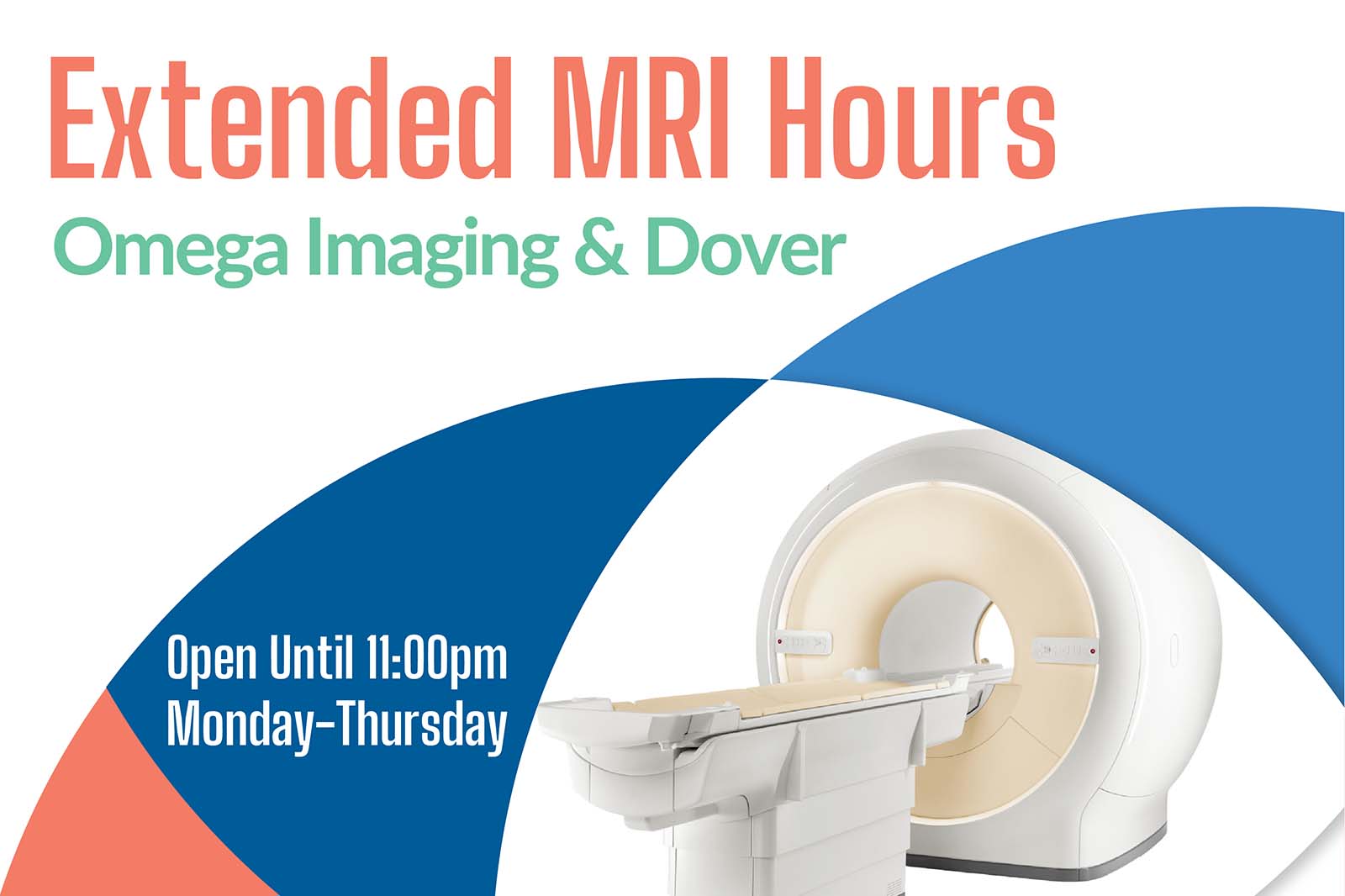
MRI is a non-invasive method of medical imaging in which the patient’s area of interest is viewed in extremely thin segments from multiple directions, providing computer-generated images. The radiologist can then “page through” the tissue or create a three-dimensional image. No radiation is involved, and there is no flattening or compression of the breast. The patient lies face-down on a special table so the breasts are suspended through an opening into unique “coils” that transmit and receive the radio frequency signals used in MRI. Once positioned, the patient is moved feet first into the magnet so he/she can still look to the outside. DIA's MRI has a large opening to alleviate feelings of claustrophobia. Earplugs and/or music are provided to diminish the sound of the MRI. An IV line is established beforehand to allow injection of the gadolinium contrast.
Why should I choose DIA for my Breast MRI exam?
DIA has 25 years experience in breast imaging (mammography and breast ultrasound) and 5 years of experience in Breast MRI. DIA Board-Certified Radiologists, Technologists, and specialized equipment offer state-of-the-art MRI exams. By correlating the patient's Breast MRI with other studies including Ultrasound and Mammography, we are able to provide the most accurate diagnosis. DIA's Bilateral Breast MRI technology generates exceptionally detailed images of breast tissues. It is an extremely accurate method of disease detection throughout the breast and surrounding anatomy. DIA's MRI determines the extent of the disease bilaterally and reveals lymph node involvement. The goal of this advanced technology is to allow detection of new breast cancers at earlier stages and enhance the management and care of our patients.
Top of Page
Why is DIA's Bilateral Breast MRI unique?
With DIA's Bilateral Breast MRI, a patient needs only one visit, and one exam. While DIA has been one of the only facilities in the region providing MRI of the breast for a number of years, a recent upgrade to GE's VIBRANT software has allowed for significantly improved resolution and faster scanning for bilateral breast exams. Contrary to having the study performed on other MRI scanners – DIA's patient does not require two exams, and two injections of contrast, on two separate days. DIA now provides patients with high-definition bilateral breast imaging in one patient visit – in one exam.
DIA's VIBRANT technology employs a unique scan procedure that thoroughly analyzes all parts of the breast tissue within minutes. With absolute confidence, DIA Radiologists utilize the system's bilateral breast imaging technique because it is the most sensitive to the patient's diagnostic needs.
Top of Page
What is Computer-Aided Detection (CAD), and how does it enhance breast MRI?
Computer-aided-detection (CAD) plays a significant role in improving quality, efficiency, and standardization in women's imaging programs. Diagnostic Imaging Associates utilizes CADstream™, the first CAD application designed exclusively for MRI. CADstream assists DIA Radiologists in the interpretation and reporting of data-intensive Breast MRI studies. The system automates image processing functions – for example, CADstream allows your DIA Radiologist to create thousands of customized images with the ability to localize lesions with 3D navigation. The result is more standardized image processing and analysis, higher quality images and more rapid interpretation of the MRI study. The use of CAD ultimately makes breast MRI more accessible to women who would benefit from this valuable study.
CADstream is the standard in CAD for MRI. The system incorporates the American College of Radiology's recommendations and the BI-RADS® Atlas (Breast Imaging Reporting and Data System) for lesion classification. CADstream is the only CAD for MRI product on the market that incorporates ACR standards.
Top of Page
Why is the gadolinium necessary?
Breast cancers have a rich blood supply, so tumors “light up” on MRI, helping to distinguish them from normal breast tissue. These are called areas of “enhancement.” It is the contrast agent, gadolinium that makes Breast MRI sensitive in cancer detection. When there is no enhancement, the radiologist can exclude the possibility of a lesion with about 95 percent confidence. Gadolinium is not the same as x-ray dye which contains iodine, and the likelihood of negative reaction is negligible.
Top of Page
What are some common uses of Breast MRI?
Am I a Candidate for Breast MRI?
Anyone (yes, men too) can have a Breast MRI exam. Clinical studies using Breast MRI have demonstrated great reliability in detecting invasive breast cancer, with reported sensitivities approaching 100 percent. If you are at high-risk for cancer, newly diagnosed with cancer or have undergone treatment for cancer, talk to your physician about the role of MRI in your care.
I have breast implants - can I have a Breast MRI?
Yes, Breast MRI is sometimes used to image silicone breast implants. If you have breast implants, it is important that you tell the DIA scheduler prior to your exam. We will also need to know if your implants are filled with saline, silicone or oil, or a combination of these. In addition, we need to know if the implant has a polyvinyl chloride sponge covering. Please get this information from your plastic surgeon’s office prior to your MRI exam.
Top of Page
Clinical Indications for Breast MRI
Is Breast MRI a better test than mammography?
Breast MRI is not to replace mammography, which has saved many lives from breast cancer. Instead it provides a powerful supplementary tool for detecting and staging breast cancer. The two tests are both great exams, each with their own strengths. Most commonly, Breast MRI is performed to answer a specific question raised from the patient’s mammogram. Breast MRI is a more sensitive test in detecting breast cancer than mammography. There are some cancers that can be seen with MRI that cannot be seen with mammography. This is especially true in patients who have dense breast tissue. Regardless of breast density, if a breast cancer is present, Breast MRI can detect it greater than 95% of the time, while mammography can detect cancer approximately 80-90% of the time. If the patient has dense breast tissue, the rate of detection of cancer can go down to as low as 50% by mammogram alone. For this reason, Breast MRI can be quite helpful in this sub-group of patients who have dense breast tissue on their mammograms and a change in their mammogram, a palpable lump or a biopsy-proven cancer. (Note: If you have dense breast tissue it is likely that DIA's Digital Mammography will provide better imaging quality for you than a conventional mammography).
Top of Page
If MRI is a more sensitive test than mammography, can I just have this test instead of a mammogram each year?
No. All Breast MRI’s should be read in conjunction with the patient’s mammogram. Both mammography and MRI have different strengths. For example, mammography is better at detecting very tiny calcifications, which can be an early sign of breast cancer. Breast MRI is not to replace mammography, which has saved many lives from breast cancer. Instead it provides a powerful supplementary tool for detecting and staging breast cancer.
Top of Page
Is Breast MRI safe?
Yes. MRI examination poses no risk to the average patient.
People who have had heart surgery and people with the following medical devices can be safely examined with MRI:
Some conditions may make an MRI examination inadvisable. Tell your doctor if you have any of the following conditions:
In addition, tell your doctor if you:
What should I wear to my appointment?
Please dress comfortably— sweatpants and sneakers are perfect. It is important to not wear clothes with metal zippers, buttons or snaps; no metal is allowed in the MRI exam room. Safety pins, straight pins, metal hair pins and all jewelry must be removed before entering the room.
Top of Page
How long does it take?
The average Breast MRI exam takes about 30 to 45 minutes.
Top of Page
How should I prepare?
There is no pre-exam preparation—you may eat and drink as you normally would and take medications as you normally would.
Tell the technologist if you have medical or electronic devices in your body, such as: